Introduction
Access modifiers in Java are keywords that control the visibility of classes, attributes, methods, and constructors. They determine which parts of a program can access a particular class member.
Java provides four access levels:
public:- Accessible everywhere (within the same class, same package, and outside the package).private:- Accessible only within the class where it is declared.protected:- Accessible within the same package and by subclasses in other packages.Default (No modifier):- Accessible within the same package (package-private).
Why Are Access Modifiers Used?
Access modifiers help developers:
Protect important data from direct access
Implement encapsulation
Control how classes and members are used
Prevent unwanted modifications
Make programs easier to maintain
Types of Access Modifiers in Java
1. Public
The public access modifier can make the attributes and methods of a class accessible from anywhere in the program, including classes outside the package. For example, consider the following code snippet:
import java.util.*;class Employee { public String name; // Public attribute public void displayName() { // Public method System.out.println("Employee Name: " + name); }}class Main { public static void main(String[] args) { Employee emp = new Employee(); emp.name = "Alice"; // Accessible globally emp.displayName(); // Accessible globally }}Here, the name attribute and the displayName() method are set to public so they can be accessed from outside the class (in the main method).
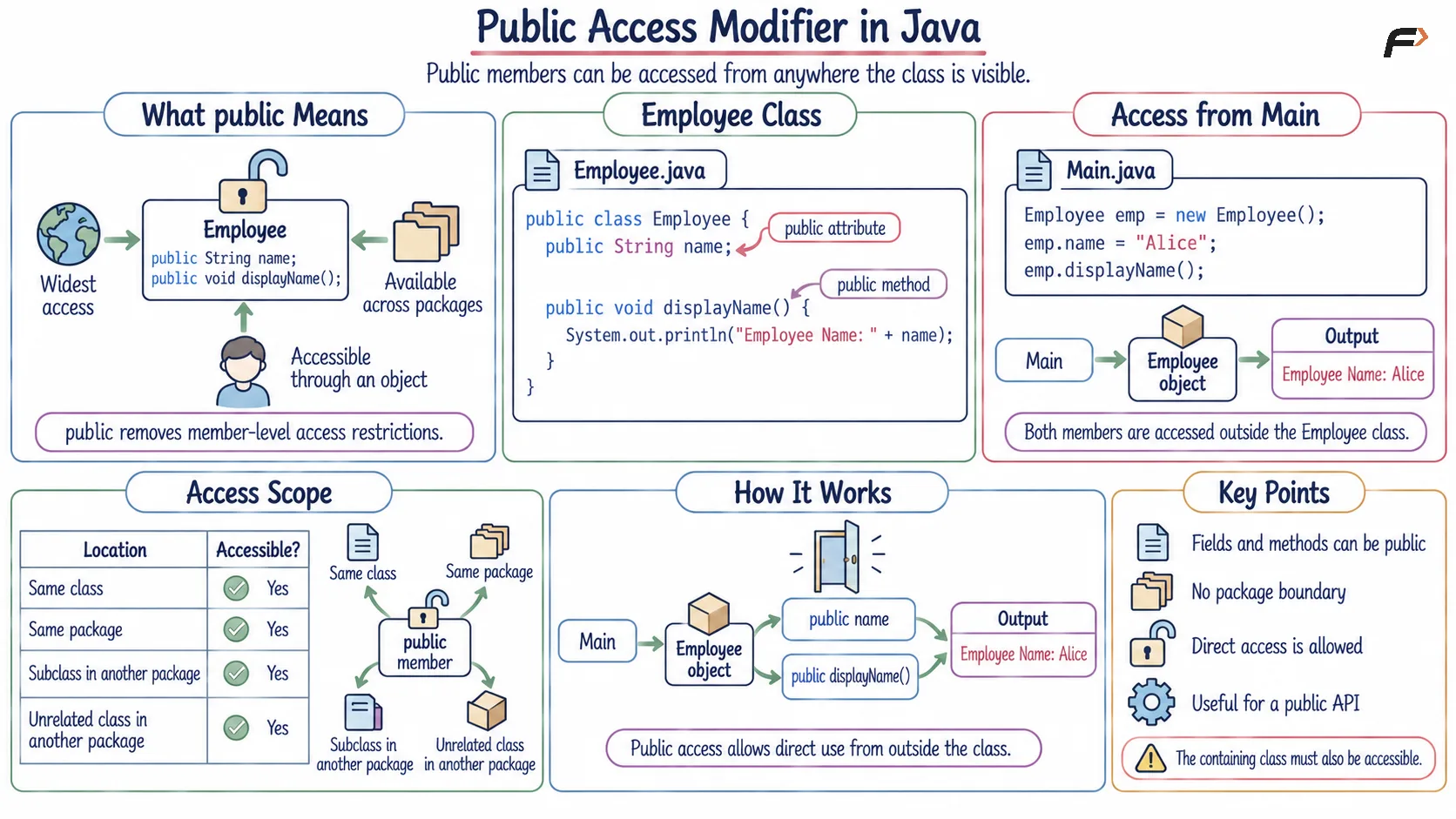
Public
2. Private
The private access modifier can make the attributes and methods of a class accessible only within the class where they were declared. For example, consider the following code snippet:
import java.util.*;class BankAccount { private double balance; // Private attribute // Getter to provide controlled access public double getBalance() { return balance; } // Public method to deposit money public void deposit(double amount) { if (amount > 0) { balance += amount; } }}// Main Classclass Main { public static void main(String[] args) { // Creating an object BankAccount acnt = new BankAccount(); System.out.println(acnt.balance); // Throws an error System.out.println(acnt.getBalance()); }}Here, the balance attribute is set to private, so it can only be accessed from within the class (using the getBalance() method) and throws an error when accessed outside of the class.
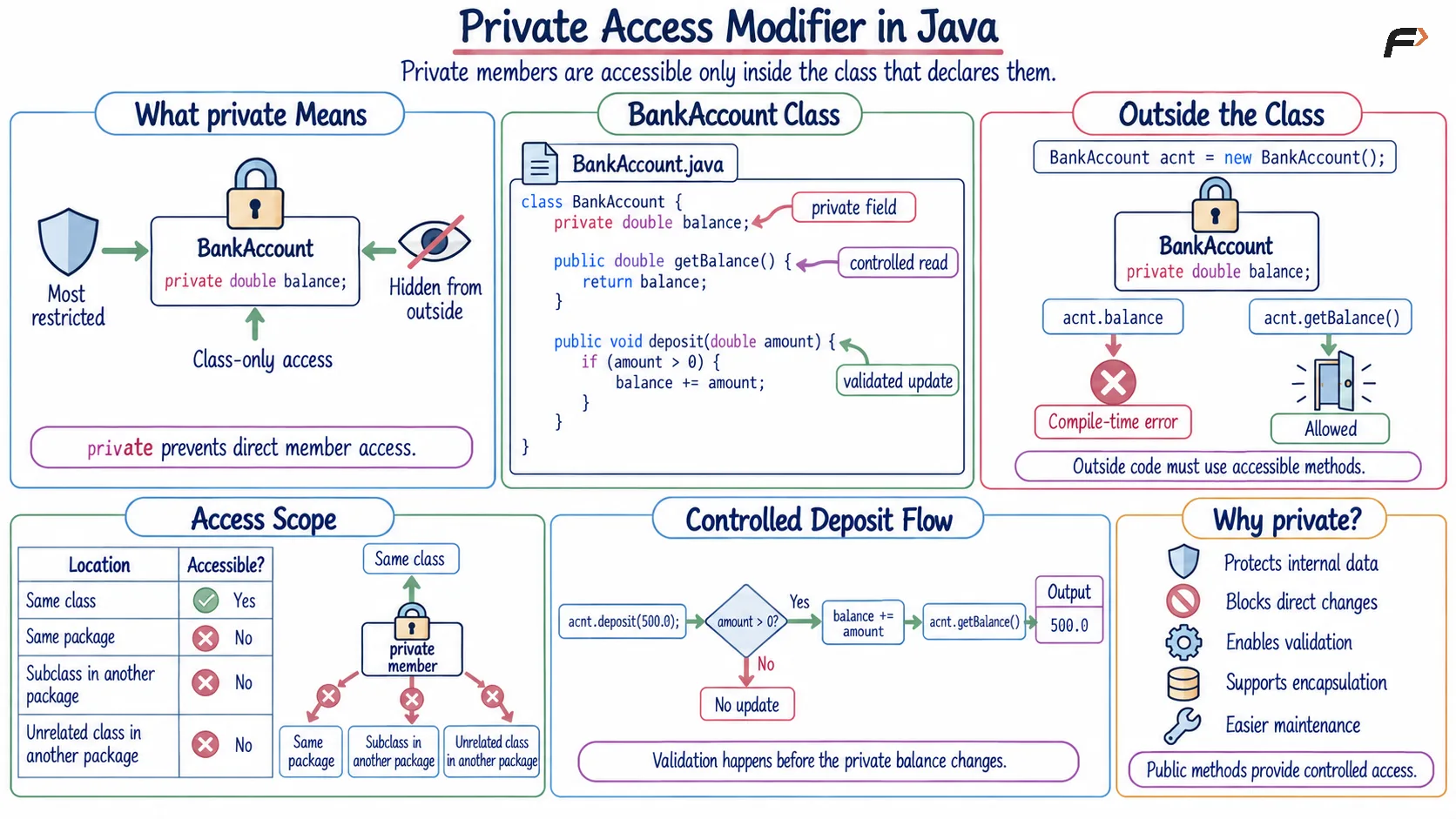
Private
3. Protected
The protected access modifier can make the attributes and methods of a class accessible within the same package and in subclasses (even if they are in different packages). For example, consider the following code snippet:
import java.util.*;class Vehicle { protected String type; // Protected attribute protected void displayType() { // Protected method System.out.println("Vehicle Type: " + type); }}class Car extends Vehicle { public Car() { this.type = "Car"; // Accessible in the subclass }}Here, the subclasses can inherit and use the type attribute and displayType() method.
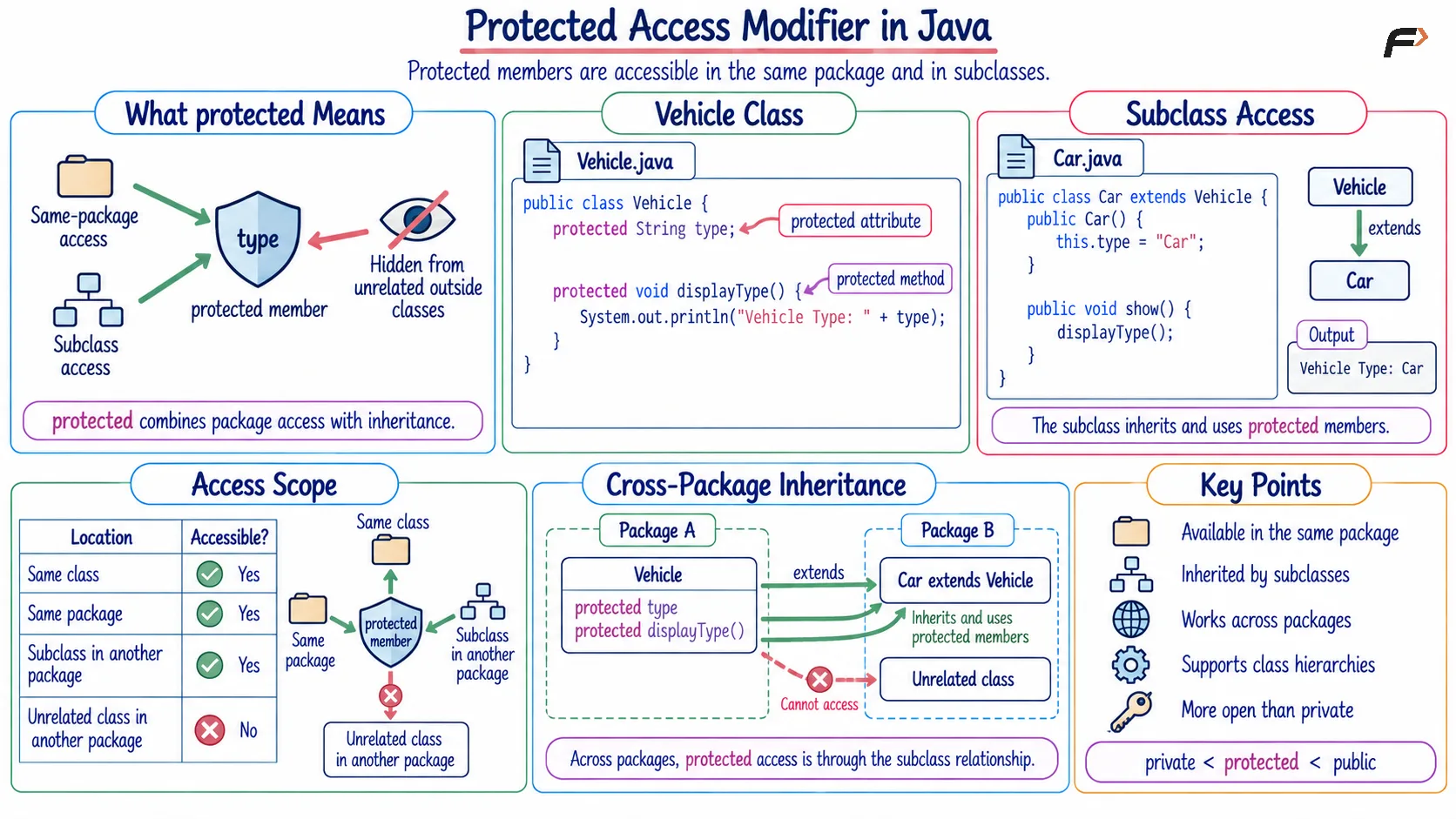
Protected
4. Default (No modifier)
When there is no access modifier specified, by default, the member is package-private in Java. This means that the member is accessible only in the package in which the class is declared, and nowhere else.
Consider the following code snippet:
import java.util.*;class PackageDemo { void showMessage() { // Default access System.out.println("Default access in the same package."); }}public class Main { public static void main(String[] args) { PackageDemo demo = new PackageDemo(); demo.showMessage(); // Accessible because it's in the same package }}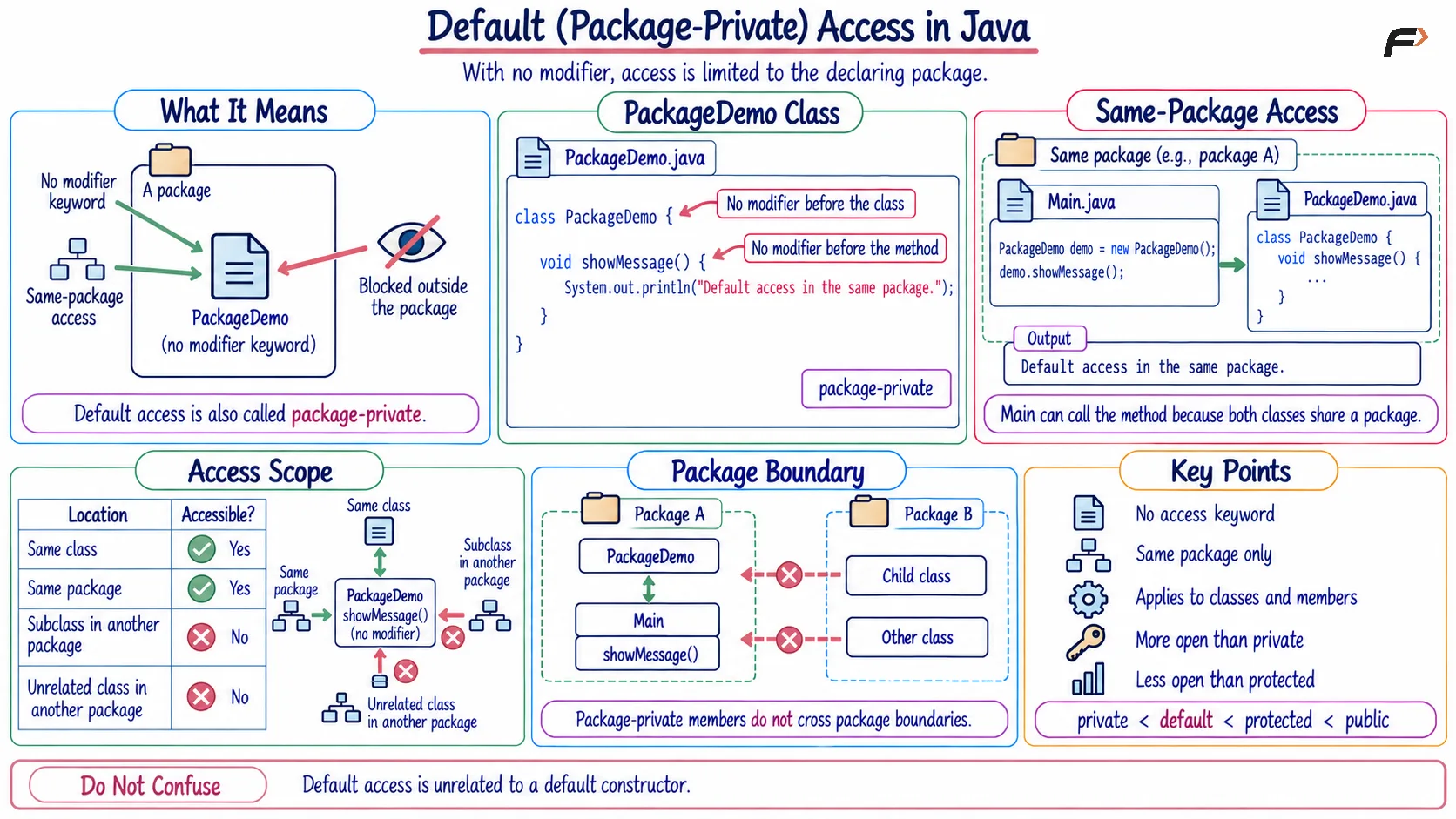
Default
Java Access Modifiers Table
Modifier | Same Class | Same Package | Subclass Outside Package | Everywhere |
|---|---|---|---|---|
| Yes | Yes | Yes | Yes |
| Yes | Yes | Yes | No |
| Yes | Yes | No | No |
| Yes | No | No | No |
Summary
Access modifiers in Java are keywords that control the visibility and accessibility of classes and their members. Java provides four levels: public, private, protected, and default (package-private), each allowing access in different scopes.
They help protect data, implement encapsulation, and control how classes and members are used. public provides the widest access, while private provides the most restricted access, with protected and default offering intermediate levels.
Be the first to add a comment.