HTTP/3 and QUIC
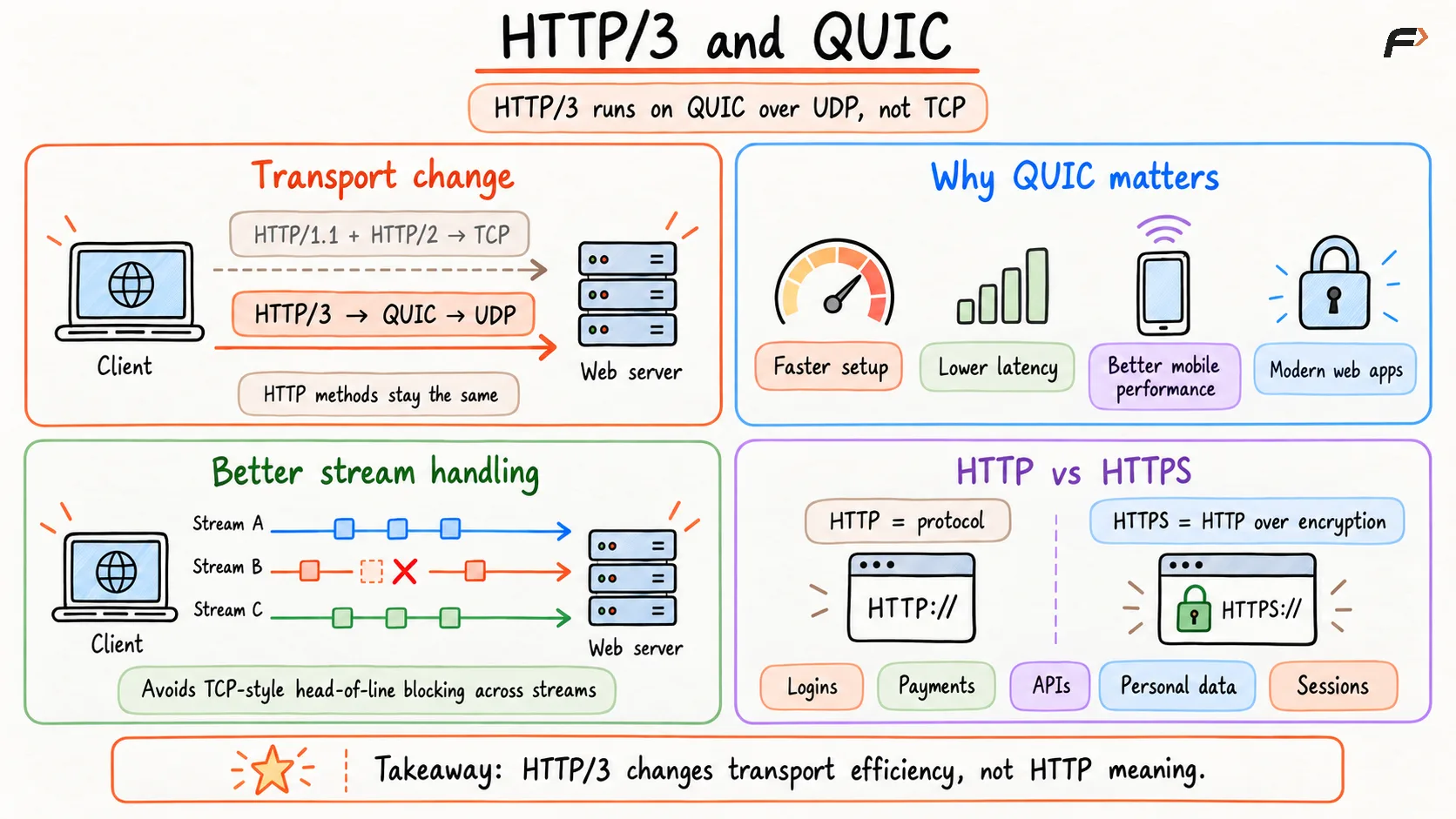
HTTP/3 is the newest major HTTP version, standardized in 2022. The biggest change is that HTTP/3 runs on QUIC, which itself runs over UDP, instead of using TCP as previous HTTP versions did.
QUIC is designed to combine transport efficiency, security setup, and better stream handling. It includes features that reduce latency and improve performance for modern web traffic.
Important ideas behind HTTP/3 with QUIC are:
Runs over QUIC instead of TCP
Uses UDP as the underlying transport base
Reduces connection setup delay
Handles multiplexed streams more effectively
Avoids TCP-style head-of-line blocking across streams
This does not mean HTTP methods or status codes change. GET, POST, 404, and 200 OK still mean the same things. The main change is in how the data is transported more efficiently.
Why QUIC Matters
QUIC matters because the web now depends heavily on speed, mobile performance, encrypted communication, and many small parallel resource requests.
When HTTP/2 uses TCP, packet loss at the transport layer can slow progress across the connection. QUIC improves this behavior by handling streams differently and combining secure transport setup more efficiently.
In practical terms, QUIC helps with:
Faster connection establishment
Lower latency in many cases
Better performance for modern web applications
Improved behavior in networks with changing conditions
That is why HTTP/3 is considered a major step in HTTP evolution.
HTTP and HTTPS
HTTP itself is the communication protocol, while HTTPS means HTTP is being used over a secure encrypted channel.
Today, most real-world web traffic uses HTTPS rather than plain HTTP. Security is especially important for:
Login systems
Payments
APIs
Personal data
Session handling
So while people often say “HTTP,” modern web communication is very often HTTPS in practice.
HTTP/3
Be the first to add a comment.