What Is DNSSEC?
DNSSEC stands for Domain Name System Security Extensions. It was created to improve DNS security by adding authentication and integrity checking to DNS data.
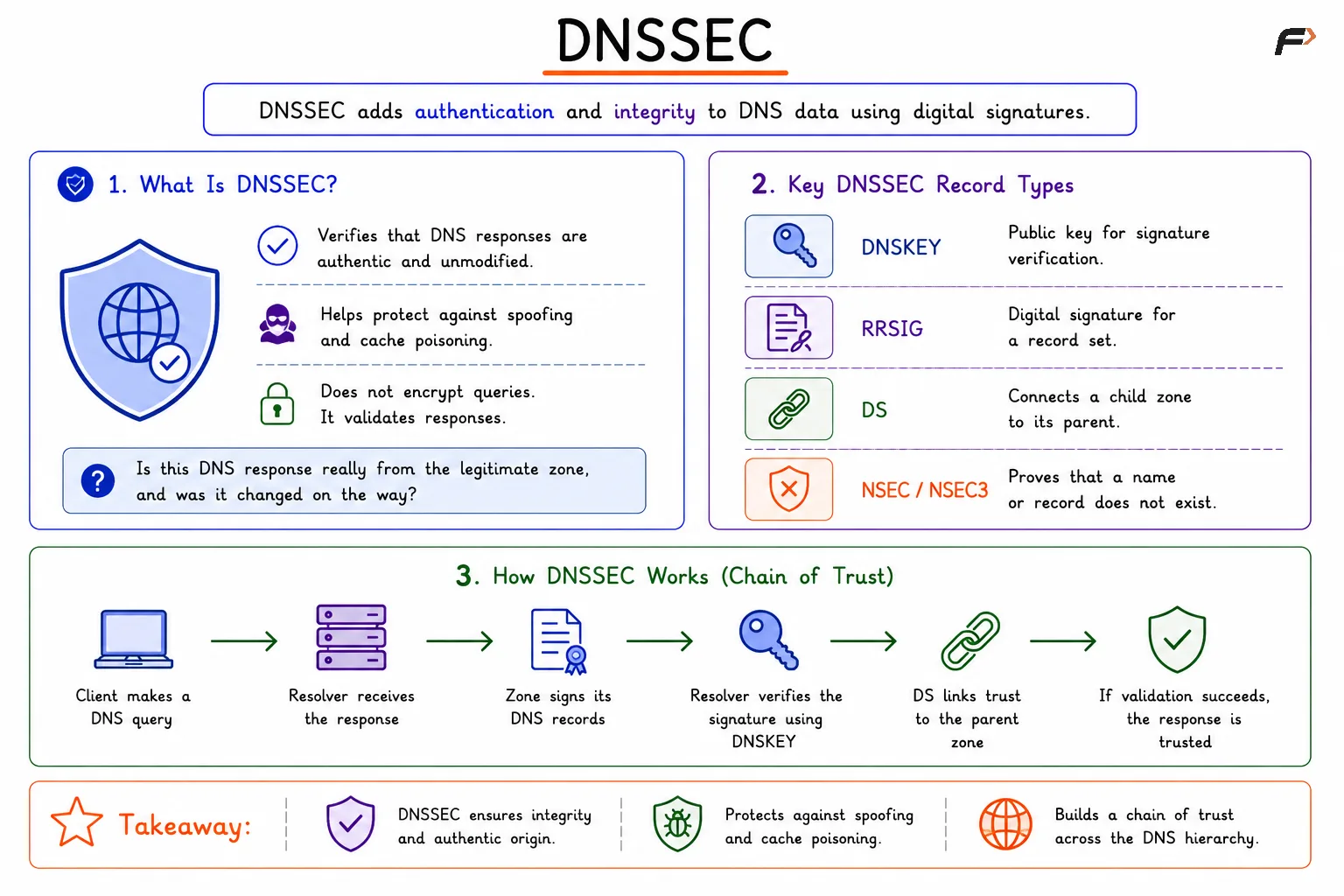
DNSSEC does not encrypt normal DNS queries like TLS does for HTTPS. Instead, it helps resolvers verify that the DNS data they receive is authentic and has not been tampered with.
In simple terms, DNSSEC answers this question:
Is this DNS response really from the legitimate zone, and was it changed on the way?
That makes DNSSEC especially important for defending against spoofing and cache poisoning.
DNSSEC
How DNSSEC Works
DNSSEC uses digital signatures and a chain of trust.
Some important DNSSEC record types are:
DNSKEY: Holds the public key for signature verification
RRSIG: Contains the digital signature for a record set
DS: Connects a child zone to its parent in the trust chain
NSEC / NSEC3: Helps prove that a name or record does not exist
The general idea is:
A zone signs its DNS records
The resolver verifies the signature using DNSKEY data
Trust is linked upward through DS records toward the parent zone
If validation succeeds, the resolver can trust the response more confidently
This provides integrity and origin authentication for DNS data.
What DNSSEC Protects and What It Does Not
DNSSEC is very useful, but it is important to understand its scope.
DNSSEC helps protect against:
Forged DNS answers
Cache poisoning
Tampered DNS responses
Fake delegation data
DNSSEC does not provide:
Confidentiality: It does not hide the query contents
General website trust: It does not guarantee the site itself is safe
Protection against all attacks: It focuses specifically on DNS data authenticity and integrity
So DNSSEC is a strong DNS security improvement, but it is not a complete internet security solution by itself.
In conclusion, DNSSEC strengthens DNS by verifying that responses are genuine and unchanged. It helps prevent spoofing and cache poisoning, making domain resolution more trustworthy.
However, DNSSEC should be used along with other security measures like HTTPS, secure DNS providers, and strong domain management practices for better overall protection.
Be the first to add a comment.