DNS Threats
DNS is a core part of how the internet works. It translates human-readable domain names into IP addresses so browsers and applications can find the correct servers.
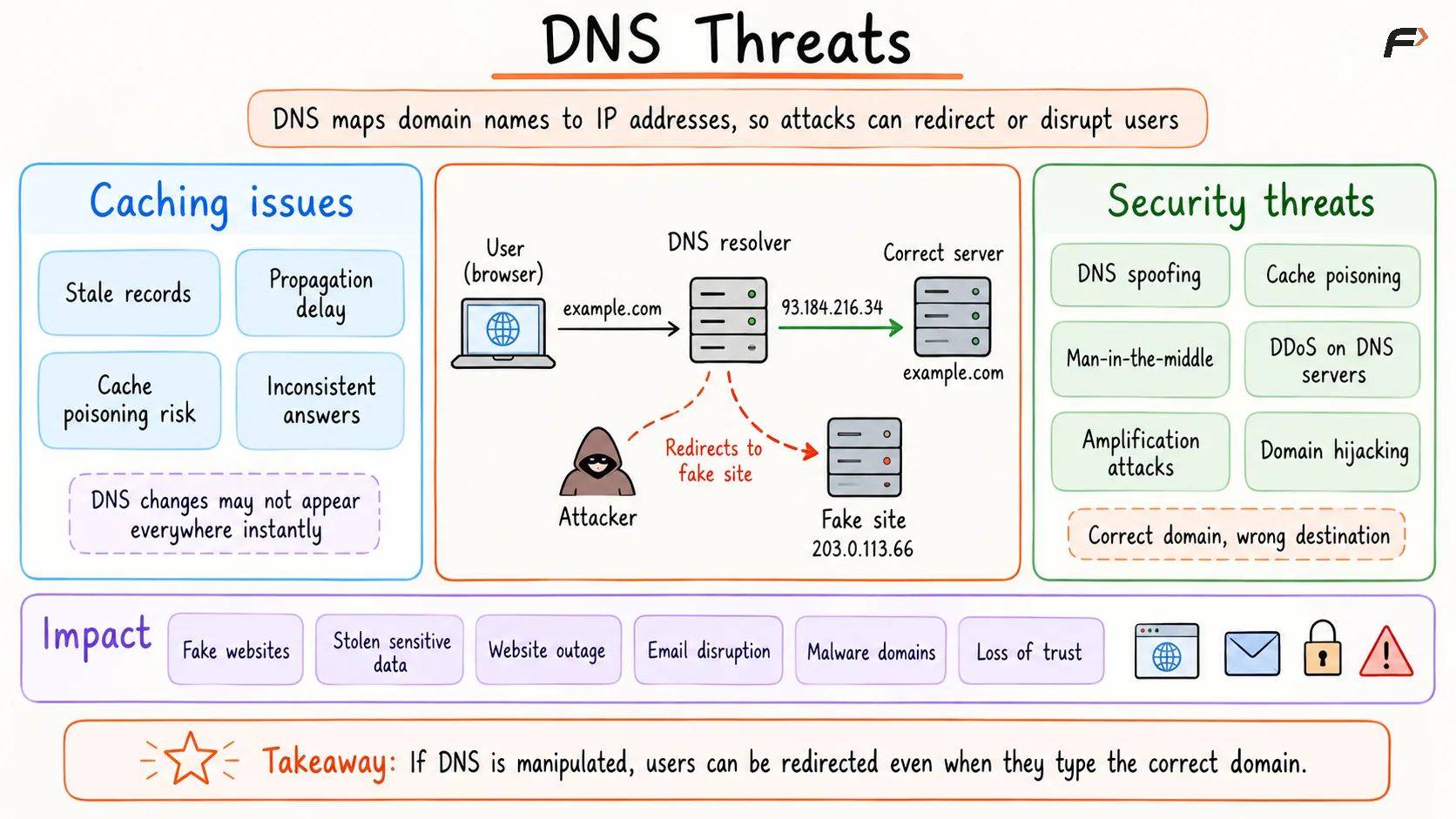
However, DNS also introduces risks. Since users depend on DNS to reach websites, email servers, and online services, any attack on DNS can redirect users, interrupt services, or expose sensitive traffic.
Caching Issues in DNS
Caching improves performance, but it also creates some issues.
Stale records: Old cached data may remain until TTL expires
Propagation delay: DNS changes may not appear immediately everywhere
Cache poisoning risk: If false data enters cache, users may be redirected incorrectly
Inconsistent answers: Different resolvers may temporarily return different results depending on cache state
This is why DNS changes, such as pointing a domain to a new server, do not always become visible instantly across the internet.
DNS Security Threats
DNS was originally designed for scale and functionality, not strong built-in security. Because of that, several threats are associated with DNS.
Some important DNS security threats are:
DNS spoofing: Fake DNS responses are used to mislead users
Cache poisoning: False records are inserted into resolver cache
Man-in-the-middle attacks: Attackers interfere with query or response traffic
DDoS attacks on DNS servers: Overwhelming traffic disrupts name resolution
Amplification attacks: DNS responses are abused to amplify attack traffic
Domain hijacking: Control of DNS settings is maliciously changed
These threats are serious because if DNS is manipulated, users may be silently redirected to fake systems even when they type the correct domain name.
DNS Threats
Impact of DNS Threats
DNS threats can affect both users and organizations. A successful DNS attack may lead to:
Users being redirected to fake websites
Sensitive data being stolen through phishing pages
Websites becoming unavailable
Email delivery being disrupted
Malware being distributed through malicious domains
Loss of trust in a business or online service
Because DNS works silently in the background, many users may not notice that something is wrong until damage has already occurred.
Be the first to add a comment.