Minimum and Maximum in BST
You are given the root of a Binary Search Tree (BST) containing integer values.
Your task is to find the minimum and maximum values present in the BST.
In a Binary Search Tree:
- All values in the left subtree of a node are smaller than the node's value.
- All values in the right subtree of a node are greater than the node's value.
Return the minimum and maximum values present in the BST, as a 2-element array/list, where the first element is the minimum value and the second element is the maximum value:
Example 1:
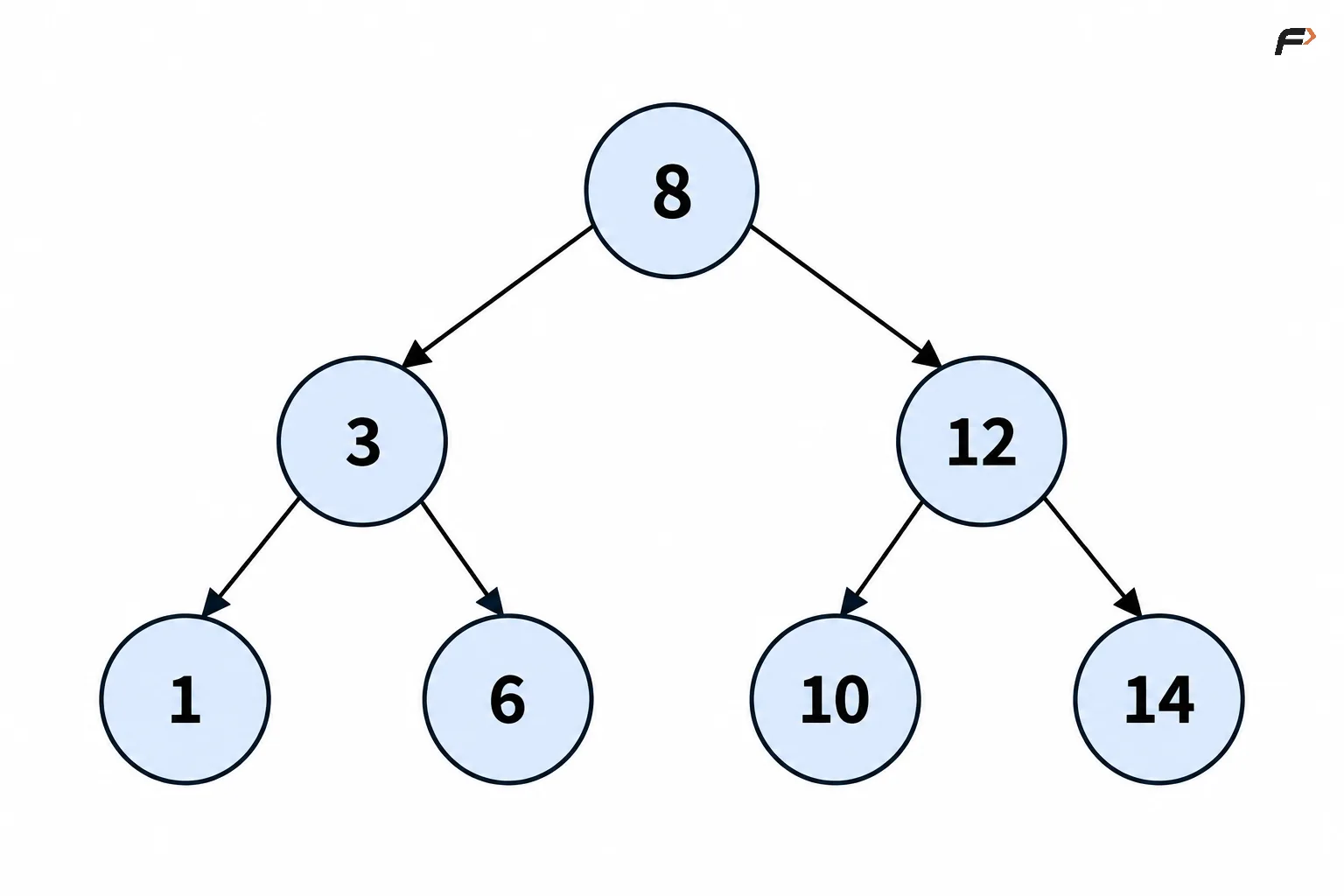
Input: root = [8, 3, 12, 1, 6, 10, 14]
Output: [1, 14]
Explanation:The smallest value in the BST is 1, and the largest value is 14. Therefore, the answer is [1, 14].
Example 2:
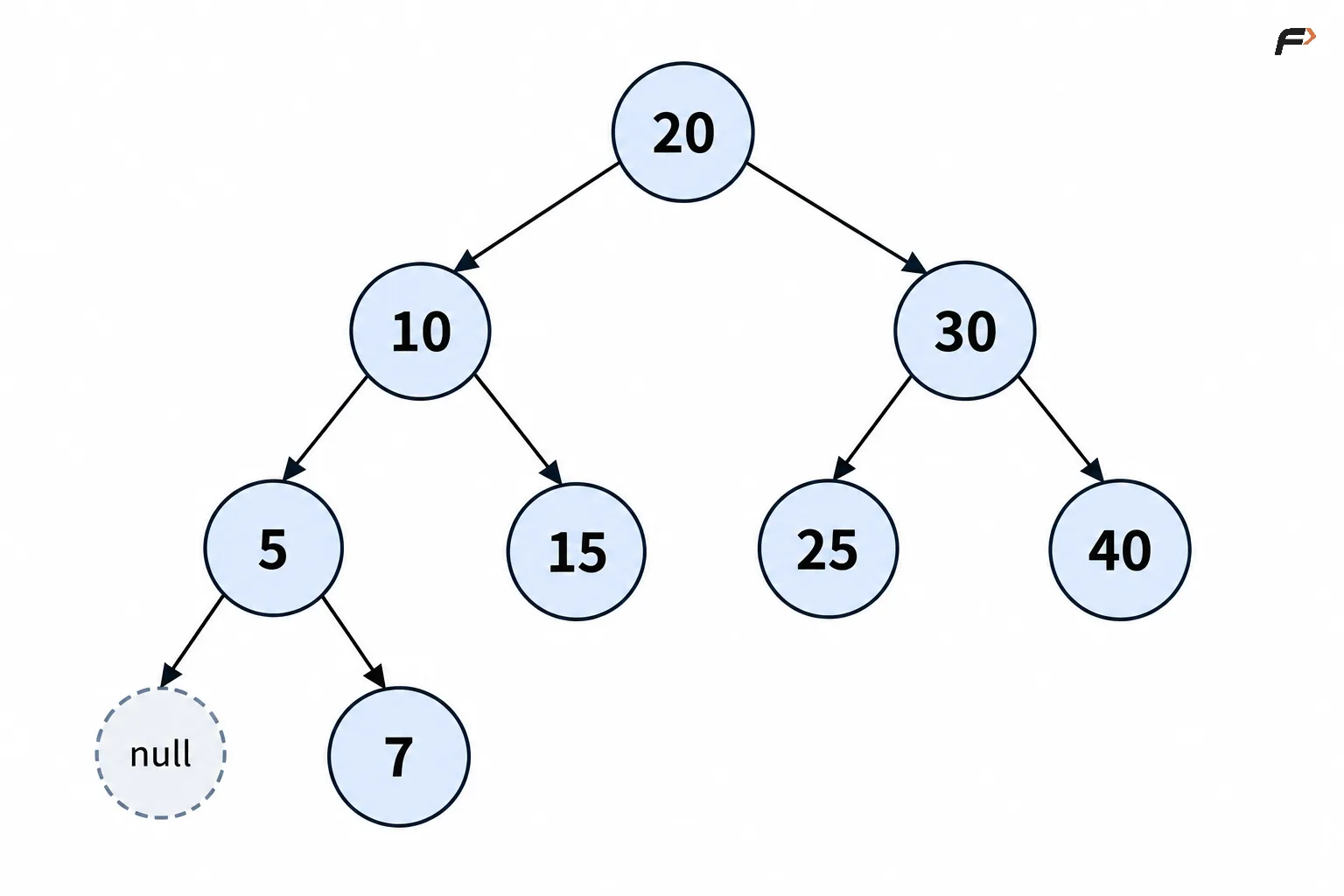
Input: root = [20, 10, 30, 5, 15, 25, 40, null, 7]
Output: [5, 40]
Explanation: Following the leftmost path gives the minimum value 5, while following the rightmost path gives the maximum value 40. Therefore, the answer is [5, 40].
Now Your Turn!
Pick the correct output for the given inputInput: root = [15, 8, 22, 4, 11, 18, 27, null, 6]
Still unsure what the problem is asking ?
Let’s go through a few more examples, step by step, to make it clearer.
Constraints:
- 1 <= number of nodes <= 105
- -109 <= Node.val <= 109
- All node values are unique.
- The given tree is a valid Binary Search Tree.