109. Dijkstra's algorithm
Given a weighted, undirected graph of V vertices, numbered from 0 to V-1, and an 2D vector/array which represents the edges:
Each entry in edges[i] is of the form [u, v, weight], where:
- u, v → represents the vertex having undirected edge between them
- weight → the weight of the edge between u and v
Given a source node S. Find the shortest distance of all the vertex from the source vertex S. Return a list of integers denoting shortest distance between each node and source vertex S. If a vertex is not reachable from source then its distance will be 109.
Example 1:
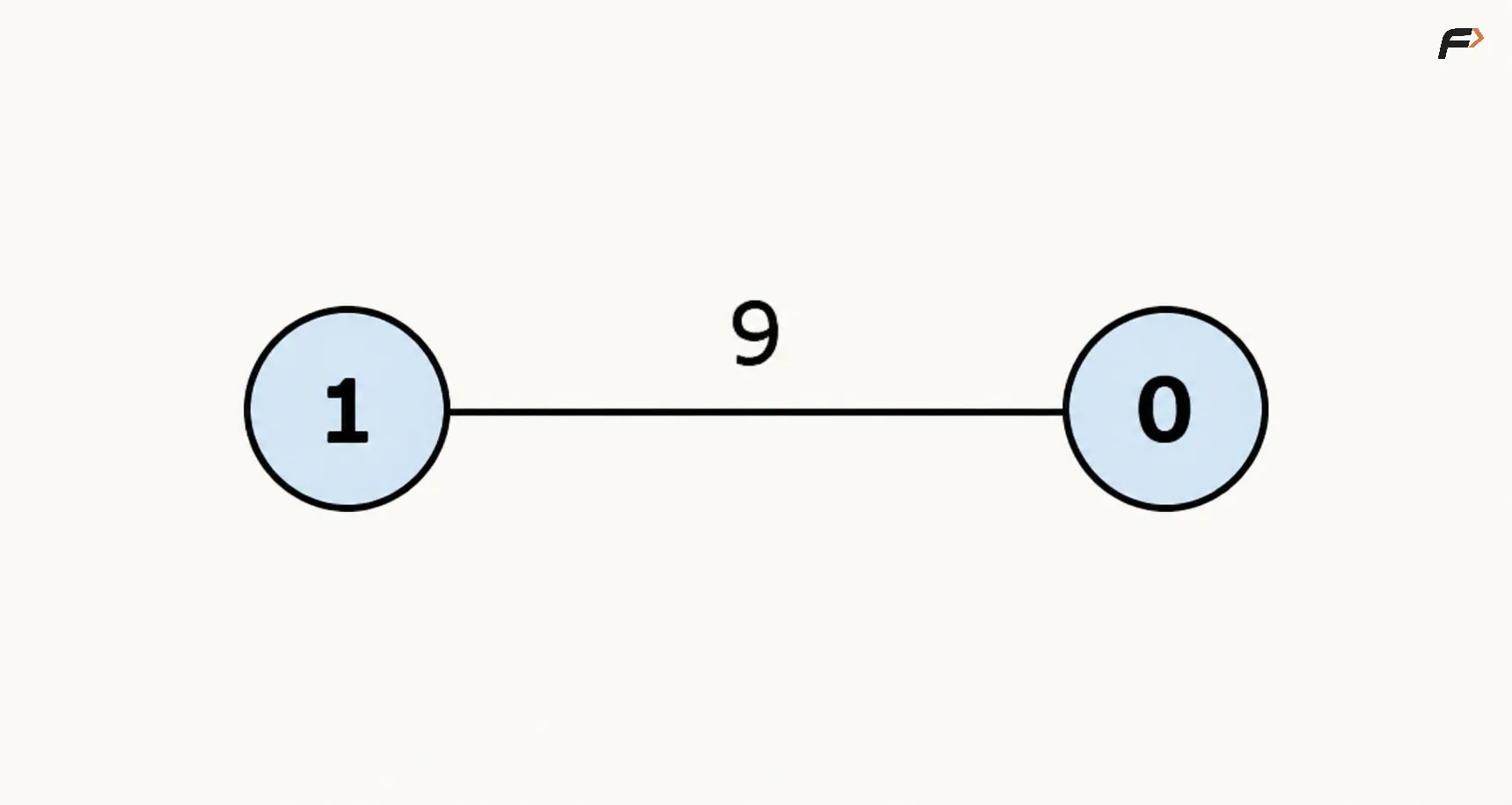
Input: V = 2, edges = [[0,1,9]] , S=0
Output: [0, 9]
Explanation:
The shortest distance from node 0(source) to node 0 is 0 and the shortest distance from node 0 to node 1 is 9.
Example 2:
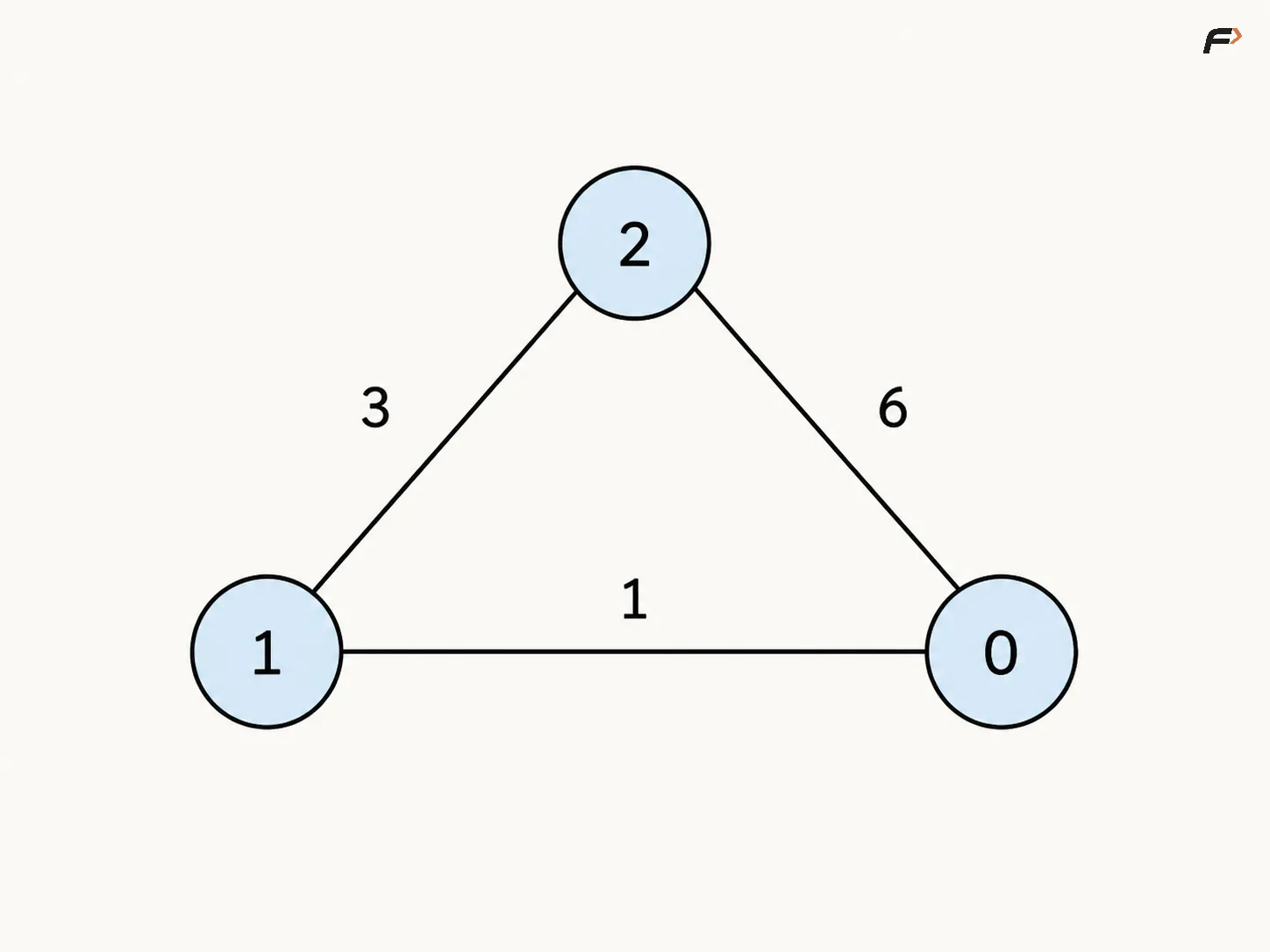
Input: V = 3, edges = [[0, 1, 1], [0, 2, 6], [1, 2, 3]] , S=2
Output: [4, 3, 0]
Explanation:
For node 0, the shortest path is 2->1->0 (distance=4)
For node 1, the shortest path is 2->1 (distance=3)
Now Your Turn!
Pick the correct output for the given inputInput: V=4, edges = [[0,1,1],[0,3,2],[1,2,4],[2,3,3]] , S=0
Still unsure what the problem is asking ?
Let’s go through a few more examples, step by step, to make it clearer.
Constraints:
- 1 ≤ V ≤ 10000
- 0 ≤ edges[i][j] ≤ 10000
- 1 ≤ edges.size() ≤ [ (V*(V - 1)) / 2 ]
- 0 ≤ S < V