71. Cheapest flight within K stops
There are n cities and m edges connected by some number of flights. Given an array of flights where flights[i] = [ fromi, toi, pricei] indicates that there is a flight from city fromi to city toi with cost pricei. Given three integers src, dst, and k, and return the cheapest price from src to dst with at most k stops. If there is no such route, return -1.
Example 1:
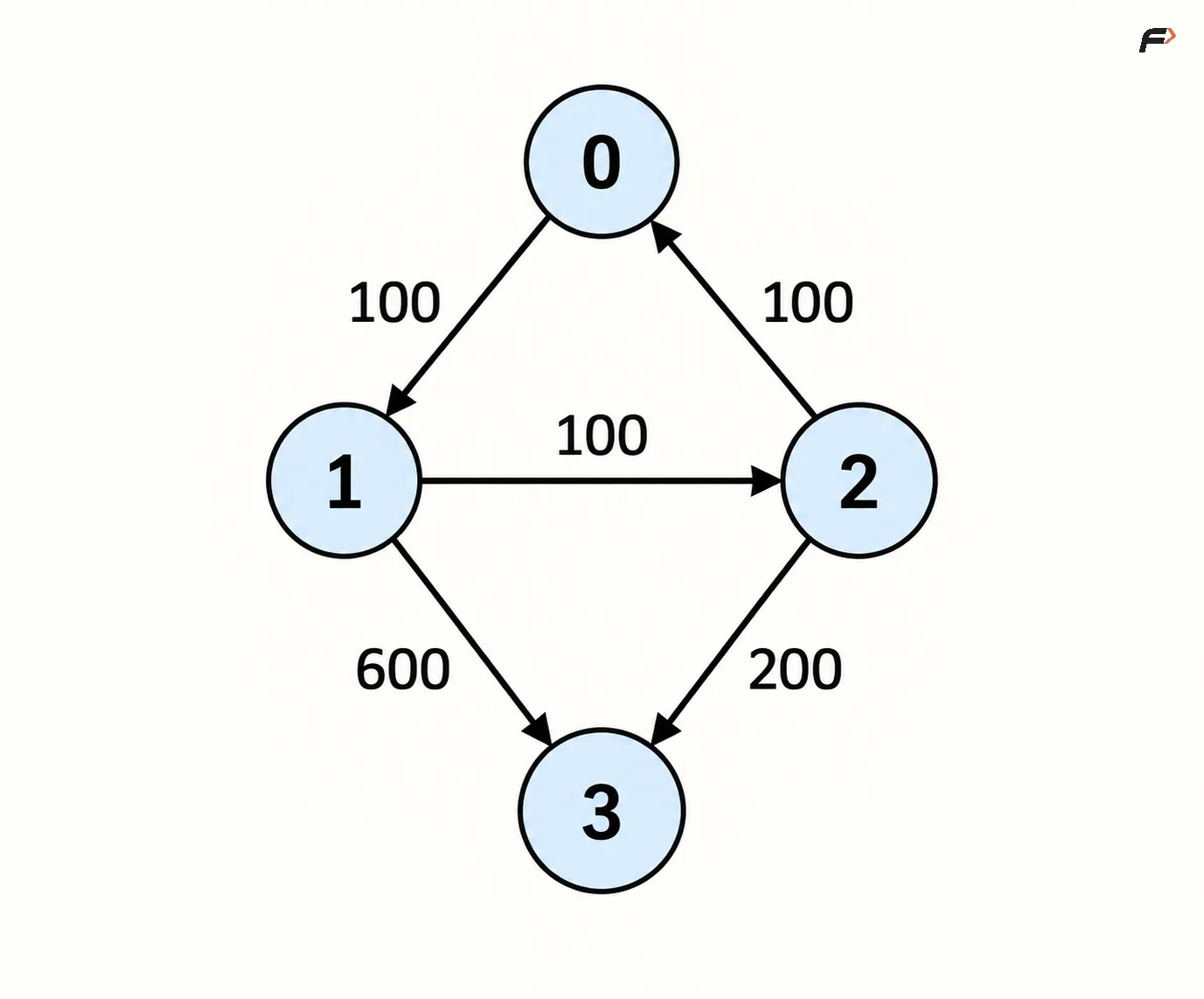
Input: n = 4, flights = [[0,1,100],[1,2,100],[2,0,100],[1,3,600],[2,3,200]], src = 0, dst = 3, k = 1
Output: 700
Explanation: The optimal path with at most 1 stops from city 0 to 3 is marked in red and has cost 100 + 600 = 700.
Note that the path through cities [0,1,2,3] is cheaper but is invalid because it uses 2 stops.
Example 2:
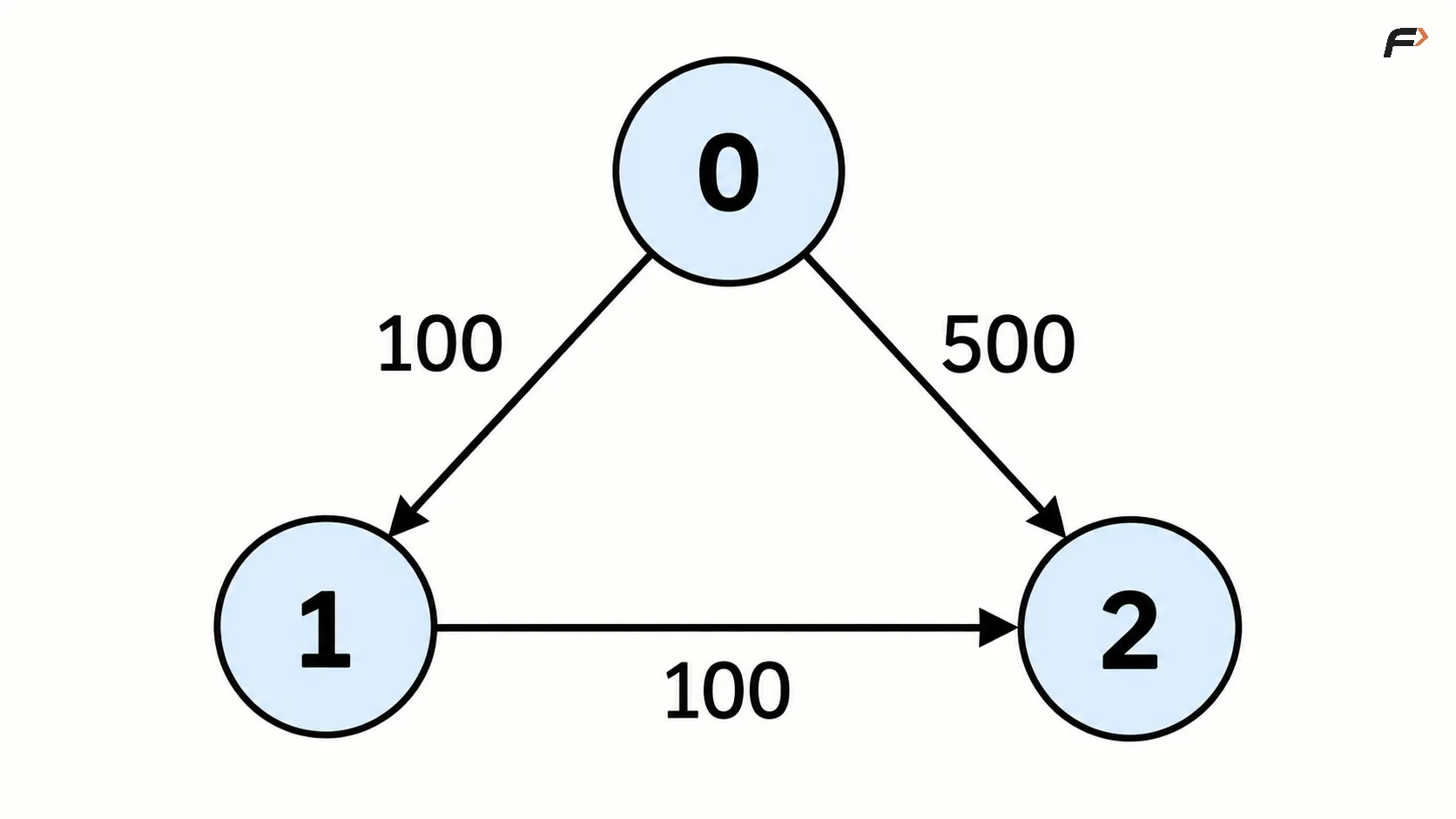
Input: n = 3, flights = [[0,1,100],[1,2,100],[0,2,500]], src = 0, dst = 2, k = 1
Output: 200
Explanation:The optimal path with at most 1 stops from city 0 to 2 is marked in red and has cost 100 + 100 = 200.
Now Your Turn!
Pick the correct output for the given inputInput: n = 3, flights = [[0, 1, 100], [1, 2, 100], [0, 2, 500]], src = 0, dst = 2, k = 0
Still unsure what the problem is asking ?
Let’s go through a few more examples, step by step, to make it clearer.
Constraints:
- 1 <= n <= 100
- 0 <= flights.length <= (n * (n - 1) / 2)
- flights[i].length == 3
- 0 <= fromi, toi < n
- fromi != toi
- 1 <= pricei <= 104
- There will not be any multiple flights between the two cities.
- 0 <= src, dst, k < n